Recruitment ROI: How UK SMEs Calculate Cut Cost-Per-Hire by 50% With Hiring Automation
Recruitment costs continue to rise for many UK SMEs. Agency fees absorb a large share of the hiring budget, while internal teams spend hours reviewing CVs they cannot get through quickly enough. Budget pressure in 2025 forces owners and HR managers to prove the value of every hire and reduce waste in the recruitment process.
Recruitment ROI is a simple way to measure the financial return of your hiring efforts. It compares the value a new hire brings to the full cost required to secure them, including fees, internal hours, vacancy loss, and early turnover. This single calculation helps employers see where money is lost and which parts of the process create the biggest drag on operations.
Most SMEs now pay more than £6,000 per hire once agency fees, job board spend, and internal time are combined. The cost rises further when a vacancy sits open for weeks or when a hire fails in the first few months. These pressures make efficient hiring a priority, not an option.
SmartHire-style automation changes this pattern. It delivers shortlists within days, reduces manual screening, and cuts reliance on agencies. The result is lower recruitment costs and faster hiring cycles without losing human oversight.
You can see how this workflow runs in practice on the SmartHire AI overview page.
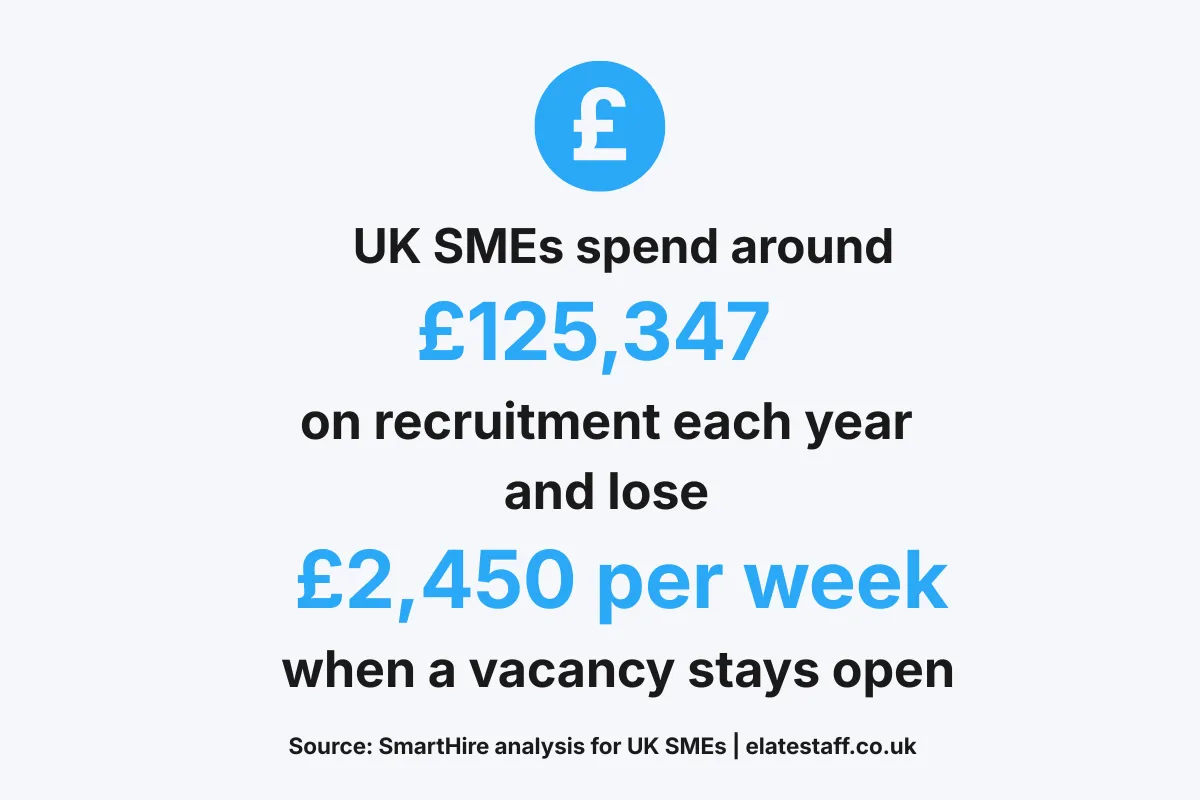
UK SMEs spend around £125,347 on recruitment activities each year and lose roughly £2,450 in output every time a vacancy stays open for another week.
Why Recruitment Costs Keep Rising for UK SMEs
These pressures shape the real cost picture for most SMEs. Even when a role looks simple to fill, several hidden factors push the final spend higher than expected.
Agency fees absorb a large share of the hiring budget. Most SMEs pay between 15% and 25% of salary for each placement, which makes repeat hiring expensive.
When a role stays open longer than planned, employers often return to job boards or agencies to restart the search. This adds more cost without moving any closer to a shortlist.
Internal time also carries a financial impact. HR teams and hiring managers spend hours screening unqualified CVs, arranging calls, and chasing candidates who drop out partway through the process. These tasks delay progress and pull staff away from operational work.
For many organisations, this creates overtime, rota gaps, or production slowdowns that add to the total cost-per-hire.
Budget pressure adds another layer. Around a third of SMEs have delayed hiring in the past year because the spend is difficult to justify. The combination of agency dependence, repeated advertising, and internal time makes the true cost of each hire far higher than the stated fee.
These patterns create a gap between what employers expect to pay and what they actually spend. This is why recruitment ROI matters and why the next section breaks down the numbers that influence it.

UK Recruitment ROI Benchmarks for SMEs (2025)
Once the cost drivers are clear, the next step is to understand how they show up in measurable terms. Most SMEs track hiring activity informally, but the numbers below give a clearer view of what each hire actually costs.
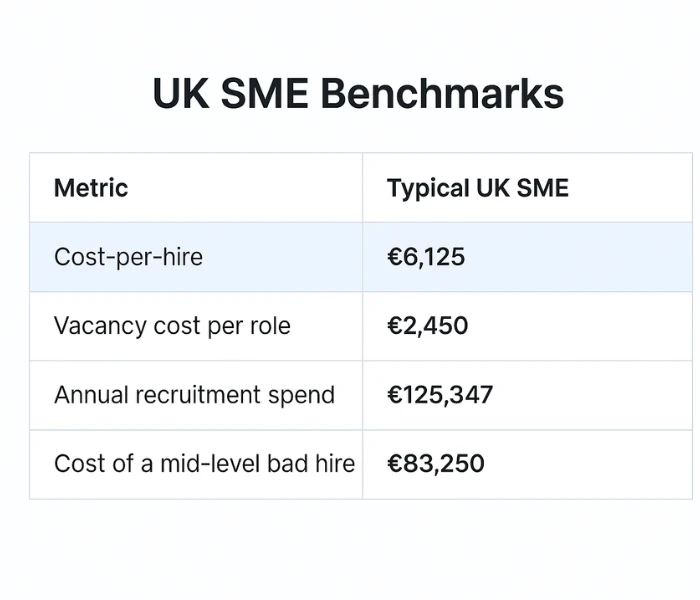
A typical cost-per-hire sits around £6,125 when agency fees, advertising spend, and internal time are combined. This figure increases when a role stays open for several weeks. Lost output, overtime, and temporary cover often add another £2,450 to the overall cost of filling a single vacancy.
The annual spend is often higher than many business owners expect. An average SME invests more than £125,347 per year in recruitment, once regular hiring, repeat roles, and associated operational impacts are included. The cost rises further when a hire does not work out as planned. A mid-level failed hire can carry an estimated cost of £83,250 when loss of productivity, rehiring, and training are factored in.
These benchmarks help employers understand why recruitment ROI is important. When the cost structure is this broad, even small improvements in speed, accuracy, and sourcing efficiency can yield significant financial gains. Automation becomes easier to justify once the baseline is visible.
Want to see how your cost-per-hire compares to these benchmarks? Ask for a simple recruitment ROI snapshot for your roles.
What Is Recruitment ROI (Return on Investment) and How to Calculate It
These benchmarks give the financial context, but employers still need a clear way to measure whether their hiring efforts are delivering value. Recruitment ROI offers that structure. It turns a complex process into a single view of what each hire returns compared to what it costs.
Recruitment ROI looks at two sides of the same decision. On one side is the full cost of filling a role, including agency fees, job board spend, internal time, and vacancy impact. On the other side is the value of a successful hire. This value shows up as stable output, reduced overtime, fewer rota gaps, and lower turnover. The calculation helps business owners and HR teams understand whether their recruitment process is supporting or slowing the organisation.
How UK SMEs Measure Recruitment Performance
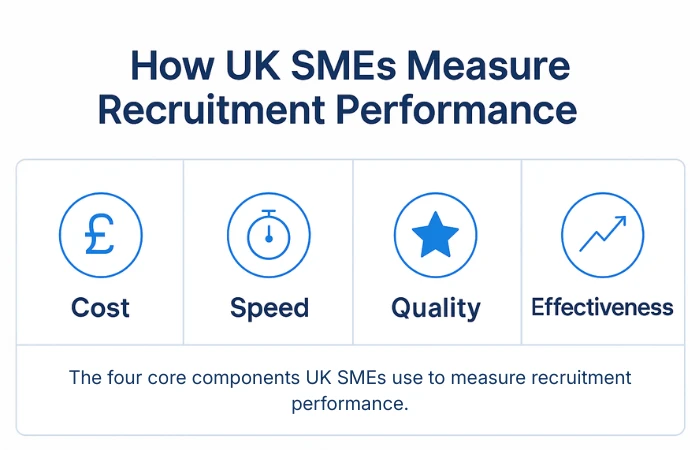
Recruitment ROI gives employers a structured way to measure recruitment outcomes. It shows whether hiring activity delivers value by tracking cost, speed, quality, and the effectiveness of the recruitment process. This framework helps SMEs compare current performance with target benchmarks and identify where to optimise the workflow.
Core Hiring Metrics UK Employers Should Track
A few simple metrics shape recruitment ROI.
Cost-per-hire (CPH). Most SMEs fall near £6,125 once direct spend and internal hours are combined.
Time-to-hire. Shortlisting alone often takes 18–21 days, which extends vacancy cost and slows operational recovery.
Quality-of-hire and early attrition. A failed hire can cost £83,250, making fit and retention central to ROI.
Vacancy cost. Each open role carries an average loss of ~£2,450, especially in shift-based teams.
These numbers form the baseline for every ROI calculation.
Simple Cost-Per-Hire Formula With UK Examples
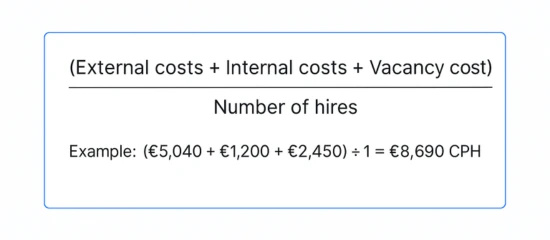
A practical formula for cost-per-hire is:
(External costs + internal costs + vacancy cost) ÷ number of hires
For a manufacturing role at £28k, agency fees at 18% add £5,040. Internal hours and job board spend add £1,250–£1,500, putting total cost-per-hire near £6,290.
A full worked example looks like this: (£5,040 agency fee + £1,200 internal time + £2,450 vacancy loss) ÷ 1 hire = £8,690 cost-per-hire.
Why Time-to-Hire and Quality Matter as Much as Direct Costs
Direct spend is only part of the picture. Each extra week a role stays open increases vacancy loss and places pressure on existing staff. Early attrition carries its own cost and forces employers to restart the process. Structured screening and hybrid workflows, which reach 90% retention, deliver stronger ROI over time because they protect both speed and quality.

Where Hiring Automation Saves Money in the Recruitment Funnel
Once employers see how cost-per-hire is built, the next question is where savings can realistically come from. Most of the avoidable spend sits in the early stages of the recruitment process, where delays and manual work create the biggest gaps in ROI. Automation targets these steps without removing the judgement HR teams rely on.
Cutting Agency Dependence and Fees
Many SMEs turn to agencies when their internal teams cannot keep up with the volume of applicants. This solves the problem in the short term but raises the cost of each hire. Agency fees at 15–25% of salary make frequent recruitment expensive, especially in healthcare and manufacturing, where turnover and repeat roles are common.
Automation changes this pattern by giving employers a shortlist they can act on quickly. When screening and ranking are handled internally through an automated workflow, reliance on agencies falls, and the recruitment budget stretches further. For most teams, agencies become a tool for niche roles rather than a default option for every hire.
A detailed side-by-side comparison sits in the AI vs recruitment agencies guide.
Automating CV Screening and Shortlisting
The highest cost in recruitment often comes from time, not invoices. A single role can attract 300 or more CVs, yet only a small share will meet baseline requirements. Screening these manually slows the process and increases vacancy loss.
Automated shortlisting reduces this burden. A SmartHire-style workflow screens the full applicant pool and produces 10 interview-ready candidates within 72 hours.
You can see how AI matching and scoring work on the AI job matching feature page
HR and managers regain time for interviews and decision-making instead of spending days on initial review. Screening time decreases by around 71%, which strengthens ROI by reducing internal costs and the impact of vacancies.
See a real 300 CVs → 10 candidates in 72 hours example. Request a sample SmartHire shortlist or match report.
Reducing Failed Hires and Early Attrition
Recruitment ROI declines sharply when a hire leaves within the first few months. Early attrition increases turnover, drives repeat advertising, and disrupts teams already carrying extra workload. Automation helps prevent this by applying consistent scoring, checking compliance needs, and matching availability or shift requirements before candidates progress.
These steps improve the quality of hire and reduce the risk of early churn. In many SMEs, this shift alone provides a significant financial return. Some teams save £116,000 a year by avoiding repeat hiring caused by mismatched candidates.
SmartHire-Style Workflow: 300 CVs → 10 Candidates in 72 Hours
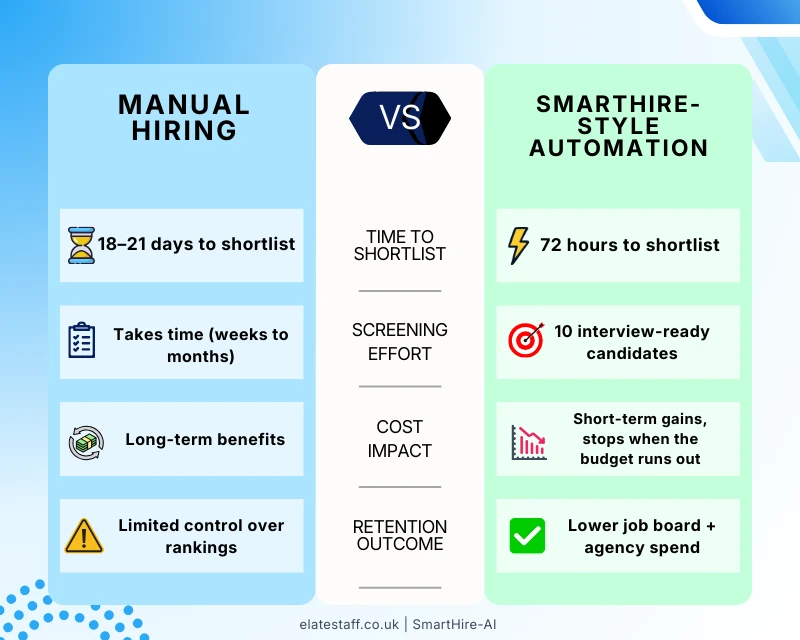
This comparison shows how manual hiring slows shortlisting and increases cost through screening time and vacancies. SmartHire-style automation compresses the process to 72 hours while improving shortlist quality and retention..
The impact of automation becomes clearer when the full hiring workflow is compared side by side. Most SMEs follow a manual process that depends on staff availability, which slows progress at the exact moment the business needs the role filled. A SmartHire-style approach removes these delays by creating structure and speed at the start of the recruitment process.
Manual Hiring Baseline (Typical SME Scenario)
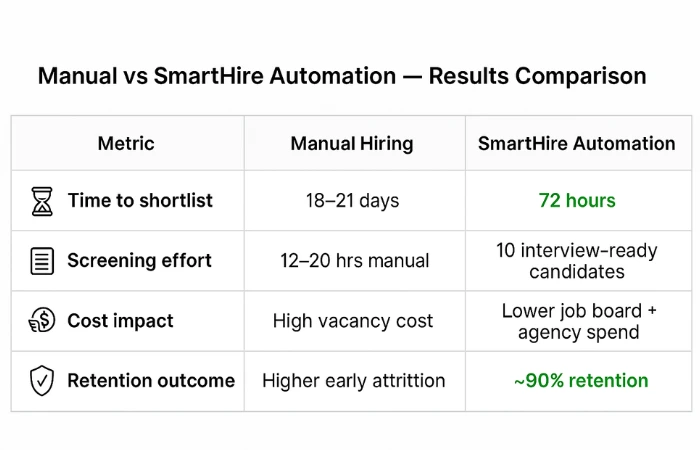
A manual search begins with a large stack of applications. HR teams and hiring managers sort through each CV to find candidates worth shortlisting. This step alone can take 18–21 days. During this time, internal teams spend 12–20 hours reviewing CVs, scheduling calls, and managing admin around early-stage screening.
These delays affect operations. Workloads rise, shifts run short, and overtime becomes routine. Vacancies remain open longer than planned, which increases cost and pushes many employers toward agency support simply to move hiring forward.
Automated Workflow With AI Screening + Human Review
A SmartHire-style workflow removes this bottleneck. The system screens the full applicant pool and applies clear criteria before the hiring team sees any profiles. Within 72 hours, employers receive a shortlist of 10 interview-ready candidates. Each candidate is scored, checked, and ranked so the team can progress directly to interviews.
Human judgement remains central. Recruiters and managers still decide who to move forward, but they start from a shortlist rather than a large, unfiltered pool. This approach supports 90% retention, reduces vacancy duration, and helps employers reach an end-to-end time-to-hire of around 18 days, even in high-volume roles.
Industry-Specific ROI Models (Manufacturing, Healthcare, Logistics)
Recruitment ROI shifts depending on the type of work, the pressure on operations, and how often the same roles need to be filled. High-volume sectors feel these costs more than others. Manufacturing, healthcare, and logistics each show clear patterns where a faster shortlist and better candidate fit lead to meaningful savings. The figures below reflect typical scenarios drawn from UK SME hiring data.
A simple way to compare sectors is to look at cost-per-hire before and after automation. These models highlight how vacancy length, turnover, and agency use influence the final return.
ROI Comparison Table
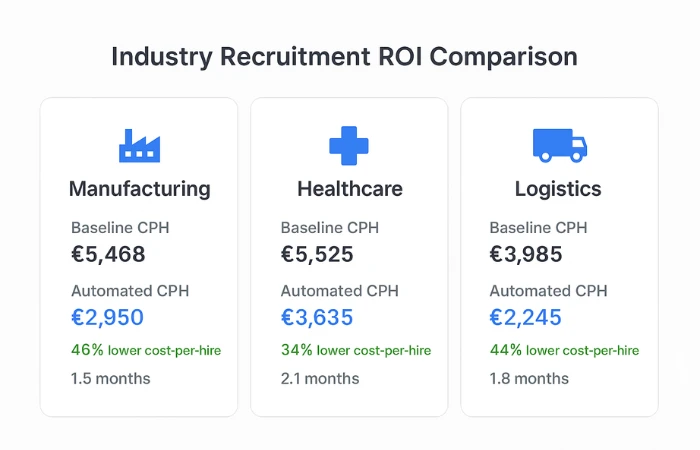
Manufacturing teams benefit from reduced overtime and fewer line disruptions. When a role stays open, production slows and units fall behind schedule. A faster shortlist reduces these gaps, which drives most of the ROI.
Healthcare teams see similar gains but for different reasons. Rota stability improves when hiring is consistent. Fewer agency shifts are needed, which lowers spend and gives staff a more predictable workload. This stability also reduces early attrition, which strengthens ROI over the year.
Logistics gains come from volume. Warehouses and distribution centres often recruit, and each delay affects throughput. A predictable shortlist delivered within days helps managers fill roles before backlogs grow.
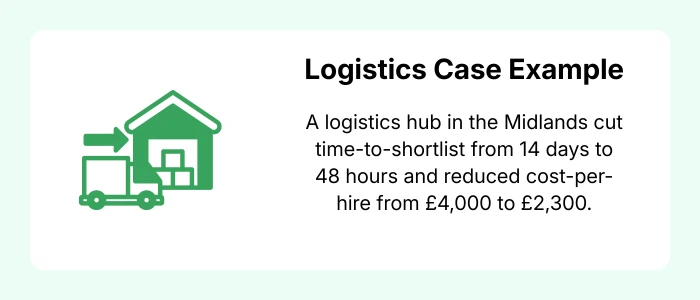
One logistics hub in the Midlands reduced time-to-shortlist from 14 days to 48 hours and lowered the cost-per-hire from £4,000 to £2,300 by switching to a SmartHire-style automated workflow.
These sector differences show that recruitment strategy automation is not only about saving time. It changes how teams plan, operate, and meet daily demand.
Recruitment ROI Calculator: Model Your Savings
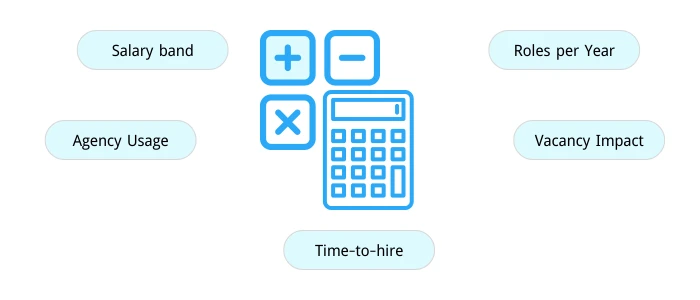
Once employers see how ROI varies by sector, the next step is to estimate savings for their own roles. A simple calculation is enough to show whether the current recruitment process supports the business or puts pressure on it. This model focuses on the inputs that carry the most weight for UK SMEs.
A useful ROI estimate starts with a few basic details: salary band, number of hires per year, agency usage, time-to-hire, and vacancy duration. These figures reveal the cost of each hire and identify areas where savings can be achieved through automation.
For example, a manufacturing team filling 17 roles a year often spends around £5,468 per hire once fees and internal time are counted. With automation, this cost can fall to £2,950. The saving per role is £2,518. When multiplied across the year, this produces an annual saving of £42,806, even before vacancy reduction and lower attrition are included.
The same approach works for healthcare and logistics teams. Small improvements in time-to-hire reduce vacancy loss, while stronger shortlists reduce the risk of early churn. These factors combine to strengthen recruitment ROI over the full year.
Employers who want a clearer picture can use a simple calculator or spreadsheet to test different scenarios. Once the baseline is visible, the financial impact of a 72-hour shortlist becomes easier to justify.
Pricing for these workflows is outlined on the SmartHire AI pricing page.
Hybrid AI + Human Screening vs Manual and Pure AI
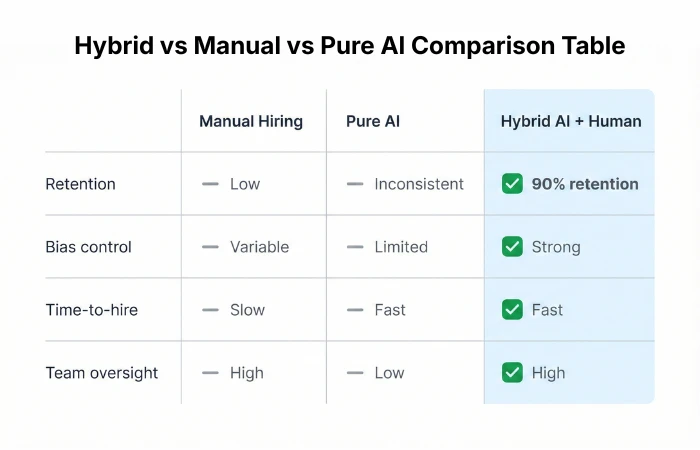
Recruitment ROI depends on more than speed. It comes from the balance between consistency, judgement, and how well a hiring model supports day-to-day operations. Most employers rely on one of three approaches: a manual process, a fully automated tool, or a hybrid model that blends automation with human review. Each path shapes the quality of hire, retention, and overall cost.
The manual route offers control but slows progress. HR teams spend hours reviewing CVs and arranging early screenings. This increases vacancy cost and raises the chance of rushed decisions when deadlines grow tight. Quality varies with workload, which affects turnover and makes ROI difficult to sustain.
Pure AI tools promise speed but often lack the context UK SMEs need. They also carry higher compliance risk if decisions are not explainable or supported by clear human oversight. They screen quickly but can struggle with role nuance, shift needs, or compliance checkpoints. Without human oversight, hiring teams risk moving forward with candidates who look strong on paper but do not fit the environment. This leads to early attrition, which is one of the most expensive outcomes in recruitment.
A hybrid model solves these issues. Automation handles the heavy lift by processing the full applicant pool and ranking candidates. Human reviewers then make the final decisions. This approach supports 90% retention, reduces bias by around 55%, and keeps cost-per-hire within a manageable range. It also shortens time-to-hire without removing the judgement that ensures long-term fit.

UK Compliance Checklist for Automated Recruitment
Any form of automation in hiring must meet UK governance standards. Employers need confidence that shortlisting is fair, transparent, and supported by clear oversight. A structured approach protects both candidates and the organisation, especially as regulations around automated decision-making continue to evolve.
A good compliance framework starts with human review. Automation can screen and rank applicants, but final decisions must remain with trained staff. This ensures each outcome is explainable and aligned with the organisation’s values and hiring policies.
The next requirement is transparency. Employers should be able to show how candidates were assessed and which factors influenced their score. Clear criteria support fairness and provide a safeguard if a candidate asks how a decision was made.
Data protection sits at the centre of compliance. Automated screening requires a Data Protection Impact Assessment (DPIA) to document how information is handled and how risks are managed. GDPR also sets rules for retention periods, access rights, and the level of automation involved in each stage.
Newer legislation, including guidance linked to the Employment Rights Bill and DUAA, places more focus on human involvement in decisions that affect a candidate’s future. Tools that allow review, override, and explanation support this standard.
UK guidance from bodies such as the ICO and ACAS continues to emphasise transparency, explainability, and human oversight in any automated recruitment process.
Compliance Checklist
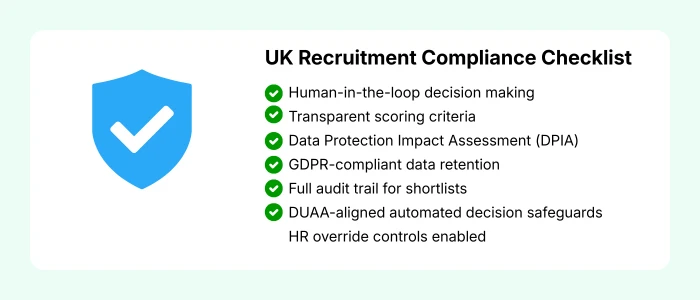
This structure gives employers confidence that automation supports fair hiring while strengthening ROI.
SmartHire never auto-rejects candidates. Human reviewers validate all shortlist decisions, which keeps the process aligned with DUAA expectations for meaningful human involvement in hiring outcomes.
Common Objections to Hiring Automation (And How to De-Risk It)
Teams often understand the value of automation but hesitate when they reach the point of adoption. Most concerns come from past experience with rigid tools or fear that automation removes control from HR and hiring managers. These concerns are reasonable, and addressing them directly helps employers move forward with confidence.
Objection 1: “Will AI be biased or non-compliant?”
Bias and compliance risks sit at the top of most discussions. The safest approach is a hybrid model where automation performs early screening and humans make all final decisions. This protects fairness and ensures every outcome is supported by an audit trail. Clear scoring criteria and documented oversight also help employers meet GDPR, DPIA, and DUAA expectations without adding heavy administrative work.
Objection 2: “Will our team lose control of the hiring process?”
Automation handles the repetitive steps, not the judgment calls. HR and managers remain responsible for interviews, assessments, and job offers. Instead of losing control, teams gain more time to evaluate candidates who are already aligned with role requirements. This reduces pressure and improves the quality of each decision.
Objection 3: “Will this replace recruiters?”
Recruiters stay central to hiring. Automation removes the manual effort that slows progress but does not remove the human insight needed for assessing fit, culture, and long-term potential. Screening time drops by around 71%, which frees recruiters to support hiring managers, improve candidate experience, and manage workforce planning.
These concerns are common, but each has a clear path forward. When automation is used as support rather than replacement, employers gain efficiency without losing the judgement, fairness, or control their teams rely on. The next section outlines how SMEs can test this approach safely through a focused 30-day pilot.
Ready to test recruitment automation without a full rollout? Run a 30-day pilot on one or two repeat roles and measure the ROI.
How to Run a Low-Risk 30-Day Pilot
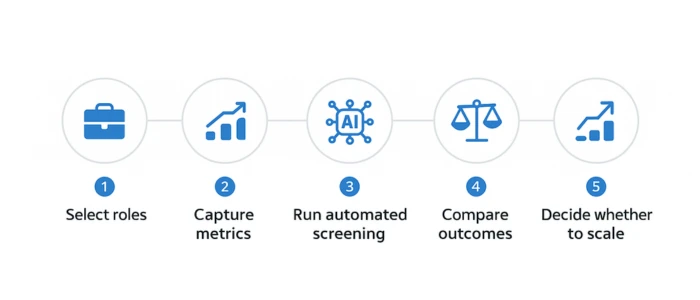
Most SMEs want proof before changing how they hire. A short pilot gives teams a controlled way to test automation without committing to a full rollout. The aim is simple. Compare the current recruitment process against a faster, structured workflow and measure the difference.
A good pilot starts with roles that recur throughout the year. These are often manufacturing operators, healthcare support staff, logistics coordinators, or similar positions with steady demand. Using familiar roles makes results easier to compare because baseline expectations are already clear.
Step 1: Select 1–2 repeat roles
Choose roles that represent typical hiring volume. This creates a fair test and avoids outliers.
Step 2: Capture baseline recruitment key metrics
Record current figures for cost-per-hire, time-to-hire, vacancy duration, and early attrition. These numbers will anchor the pilot.
Step 3: Run automated talent acquisition strategies screening on the next few hires
Utilize SmartHire-style automation to screen the entire applicant pool and generate shortlists within 72 hours.
Step 4: Compare outcomes with the baseline business goals
Evaluate the quality of the shortlist, the time it took to progress to interviews, and the change in vacancy cost.
Step 5: Decide whether to scale
If the pilot reduces internal workload, shortens time-to-hire, and improves fit, the model can be extended across more roles or departments.
This approach gives SMEs a clear view of impact without disruption. After 30 days, most teams have enough evidence to judge whether automation supports their hiring goals.
FAQ – Recruitment ROI and Hiring Automation
These are the questions most employers raise when they begin reviewing recruitment ROI and the role automation can play in improving it.
Q1: What are the key metrics of recruitment ROI?
Recruitment ROI measures the financial return of your hiring efforts by comparing the value gained from a successful hire to the full cost required to secure them. It includes direct spend, internal time, vacancy impact, and the effect of retention or early attrition on overall performance.
Q2: What is a good measure of recruitment ROI for a UK SME?
A strong ROI covers the full cost-per-hire and delivers consistent output with low attrition. For most SMEs, positive ROI appears when cost-per-hire drops toward £3,000–£3,500, vacancy time shortens, and new hires remain stable past the early months. This reduces repeat recruitment and operational strain.
Q3: How does hiring automation improve your recruitment ROI?
Automation reduces internal screening time, lowers agency reliance, and speeds up shortlisting. This shortens vacancy duration and improves accuracy in early candidate selection. These gains reduce total recruitment costs and strengthen long-term ROI without removing the human judgement managers depend on.
Q4: How do you calculate your recruitment cost-per-hire?
Cost-per-hire is calculated by adding external costs, internal time, and vacancy loss, then dividing the total by the number of hires. For many SMEs, this results in a figure above £6,000, driven by agency fees, job board spend, and the time teams invest before interviews begin.
Q5: Is AI candidate screening and talent acquisition compliant with UK GDPR and DUAA?
Yes, when automation supports rather than replaces human decision-making. Compliance requires clear scoring criteria, a documented DPIA, and human review for all final outcomes. Hybrid workflows meet these standards and give employers a transparent, auditable hiring process that aligns with UK expectations.

Next Step: See Calculating Recruitment ROI With a SmartHire AI Demo
Recruitment ROI becomes clearer when employers see the workflow in action. A short demonstration shows how automated screening, structured scoring, and human review come together to reduce time-to-hire and cut the cost of each placement. It also gives teams a chance to judge shortlist quality and understand how the model fits their roles.
SmartHire AI delivers the parts of recruitment that carry the highest cost. It screens the full applicant pool, ranks candidates with consistent criteria, and presents a shortlist within 72 hours. This shift lowers agency reliance, reduces vacancy loss, and creates a more predictable hiring process. Most SMEs reach a cost-per-hire closer to £3,000–£3,500 once automation supports the early stages.
The approach also strengthens long-term outcomes. Better matching reduces early attrition, improves rota stability, and gives managers confidence in the candidates they interview. These gains support both finance and HR teams who need a hiring process that delivers steady results.
A demo offers a straightforward way to assess the fit for your organisation. It shows the workflow, the screening logic, and the way human oversight shapes each decision. Employers can then decide whether to run a 30-day pilot on one or two roles.
Book a SmartHire AI demo to see how faster shortlists and lower hiring costs can support your next round of recruitment.